Workspace Organization: A Guide to verknüpfung erstellen windows
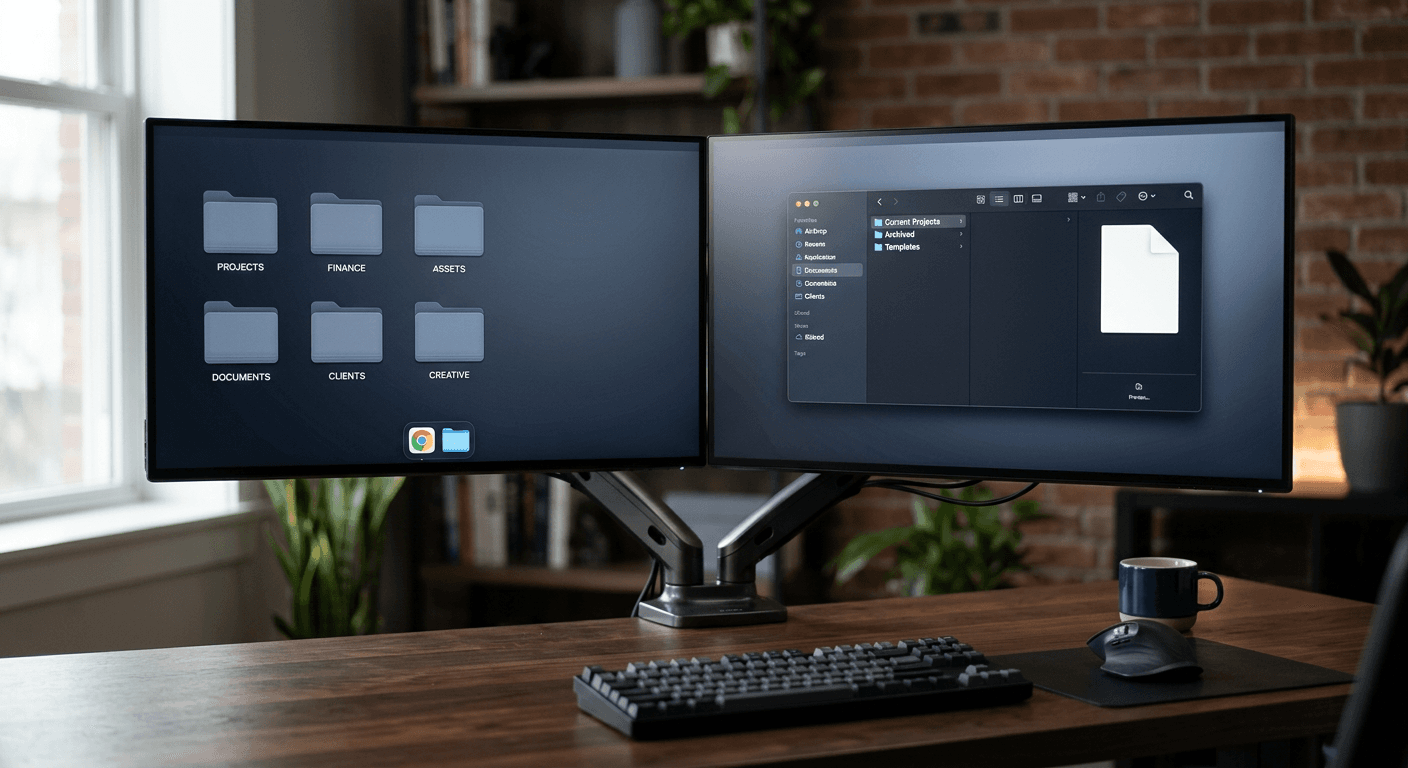
The moment you are sharing your screen during a critical strategy call and have to dig through five layers of nested directories to find a single dashboard URL, your workflow fails. Relying on the native Windows search bar or a chaotic "recent files" list is a passive strategy that inevitably breaks when file names are forgotten or network drives remap. True operational efficiency requires building an active workspace where precise pathways sit exactly where you need them, ready to execute without hesitation. Executing a strict verknüpfung erstellen windows setup transforms a default, cluttered desktop into a directed command center. It cuts out the navigational friction that drains daily productivity, ensuring that local applications, remote network assets, and critical web dashboards are instantly accessible from a centralized location.
Quick Summary
A system shortcut acts as a distinct pointer file, redirecting the operating system to a specific local application, nested directory, or remote web address without duplicating the underlying asset. Standardizing how these pathways are built prevents broken references, secures immediate access to network storage, and centralizes daily operations.
- Map out a dedicated folder hierarchy before deploying individual pointer files.
- Utilize environment variables to prevent broken paths across different user profiles.
- Deploy command-line symbolic tools when syncing assets to cloud storage providers.
- Assign global keyboard triggers to bypass the visual desktop interface entirely.
Table of Contents
- 1. Designing the Workspace Topology
- 2. Building the Standard LNK Pointer File
- 3. Executing an internet verknüpfung erstellen
- 4. Configuring the link fenster Parameters
- 5. Deploying a system link via Command Line
- 6. Registering a Global link entry Trigger
- 7. Standardizing an e link entry for Environments
- Common Pitfalls and Troubleshooting
- FAQ
- Recommended Reads
1. Designing the Workspace Topology
Why Flat Architectures Fail Under Load
Folders must physically house your pointer files. Define this architecture before generating them. Without a hierarchy, shortcuts simply accumulate on the desktop root. This visual clutter makes finding them slower than navigating the raw file system. Now consider a flat architecture. Every application, client folder, and web dashboard shares the same visual plane. This forces the operating system to render high-resolution thumbnails for heavy media assets alongside small functional pointers. It drastically slows down the initial Explorer load sequence.
The mechanics of a proper topology rely on creating a centralized "Command Folder" pinned directly to the taskbar. This acts as a primary dock containing strictly categorized sub-folders (e.g., Active Projects, Web Dashboards, Administrative Tools). The mistake most practitioners make is linking directly to root project directories rather than specific, highly utilized sub-folders within those projects. Pointing a shortcut at a top-level client folder containing 50 gigabytes of disorganized raw files saves no time. You must drill down to the exact deliverable directory or active working file before establishing the shortcut, ensuring that activating the link places you immediately at the point of action.
2. Building the Standard LNK Pointer File
The Danger of Moving the Executable
The .lnk extension dictates the standard behavior of a Windows pointer. LNK files are binary files containing a target path, a working directory string, and an embedded Object ID generated by the Distributed Link Tracking Client service. Because of this Object ID, if you move the original file to a different folder on the same NTFS volume, Windows can mathematically calculate its new location and update the shortcut automatically.
The critical mistake occurs during the creation phase. Many users, particularly when dealing with portable applications or downloaded utility tools, will grab the actual .exe file and drag it directly onto the desktop. This physically separates the executable from its required .dll libraries and configuration files stored in the original folder, causing immediate crash errors upon launch.
Practical rule: Never drag an executable file directly to a new location; always use the right-click drag method and select "Create shortcuts here" from the context menu to ensure dependencies remain intact.
3. Executing an internet verknüpfung erstellen
Why Browser Drag-and-Drop Creates Fragile Files
Managing web URLs requires a different mechanism entirely. Unlike binary LNK files, an internet shortcut utilizes the .url extension and is essentially a plain-text INI file. It contains a standard [InternetShortcut] header followed by the direct web address and an icon index pointer.
The common mistake is relying on the browser's address bar. Users routinely click the small padlock icon next to a URL and drag it directly to the desktop. This method relies heavily on the active browser's shell integration, which often embeds proprietary metadata or locks the shortcut's icon to the specific temporary cache of that browser session. When you clear your browser cache, the icon permanently breaks, leaving a generic white sheet.
The durable approach is executing an internet verknüpfung erstellen manually via the operating system. Right-click the desktop, select New, click Shortcut, and paste the direct HTTPS string into the target field. This forces the OS to generate a clean, generic file that bypasses browser-specific caching. It guarantees the URL will always open securely in whatever application is currently set as the system's default browser, protecting the link against software uninstalls or cache purges.
4. Configuring the link fenster Parameters
Breaking the Working Directory Dependency
The properties dialog of a shortcut dictates its operational parameters before the application even boots. By accessing the link fenster properties via a right-click, you expose three critical fields: Target, Start in, and Run. The "Target" is the absolute path to the executable, while the "Run" dropdown allows you to force an application to launch minimized (to run silently in the background) or maximized (ideal for focus-intensive software like video editors).
The most destructive mistake happens within the "Start in" field. This field defines the working directory the application assumes upon launch. When customizing parameters, administrators frequently delete the "Start in" string, assuming the absolute target path is enough. If a financial application or a local server relies on a relative path to load its database (e.g., .\data\config.ini), launching it without a defined working directory forces it to look inside the default C:\Windows\System32 folder. This inevitably results in a total application failure or a software reset to factory defaults. Always leave the "Start in" field pointing to the original installation directory.
5. Deploying a system link via Command Line
Where Symbolic Paths Outperform Standard Shortcuts
Standard .lnk files operate exclusively at the graphical shell level. If you point an automated backup tool or a cloud synchronization client (like Google Drive) at a standard shortcut, the software backs up the tiny 2KB pointer file, not the folder it points to. To trick software into reading a remote directory as if it exists locally, you must utilize the mklink command line tool.
Deploying a system link creates a symbolic route at the deep NTFS file system level. When you execute mklink /D "C:\LocalFolder" "D:\RemoteStorage", the operating system intercepts requests before the application layer sees them, seamlessly routing data transfers.
The primary failure mode here is confusing the /D (Directory Symbolic Link) flag with the /J (Directory Junction) flag. While junctions work flawlessly for local folder redirects on the same hard drive, they are incapable of spanning across different network volumes. Using a /J switch to point a local folder to a mapped network attached storage (NAS) drive will instantly throw a "Local volumes are required" error. Always use the /D flag when bridging local machines to external storage arrays.
6. Registering a Global link entry Trigger
The Conflict with Native Operating System Hooks
Speed is the ultimate goal of optimization, and clicking icons is inherently slower than striking a key. The Windows properties dialog allows you to assign a dedicated keyboard combination to any shortcut. Once applied, the Desktop Window Manager registers this hotkey globally, meaning you can launch the target application regardless of what software you currently have in full screen.
Every new link entry you define adds a polling hook to the operating system. The mistake users make is assigning combinations that clash with hardware drivers. Setting a trigger like Ctrl + Alt + Down Arrow seems intuitive, but major graphics drivers rigidly claim these exact combinations to flip monitor orientation. When you press the keys, the hardware driver intercepts the command before the Windows Shell ever registers the request, causing the shortcut to fail silently while your screen turns upside down. Always utilize a three-modifier combination - such as Ctrl + Shift + Alt + [Letter] - to guarantee your triggers remain isolated from system-level hardware hooks.
7. Standardizing an e link entry for Environments
How Absolute Paths Break Across User Profiles
When configuring a workspace that will be duplicated across a corporate network or shared among multiple machines, hardcoding absolute file paths guarantees failure. Setting a target to C:\Users\JohnDoe\Documents\Report.pdf works perfectly until the exact same shortcut is clicked by a user named Jane on a different terminal.
Setting up an e link entry using environment variables solves this portability crisis. By formatting the target as %USERPROFILE%\Documents\Report.pdf, you instruct the operating system to dynamically query the current active session and inject the correct user path at the exact moment of execution.
The most frequent error in this phase is using mapped drive letters (e.g., Z:\Finance) for network shares. Drive letters map during the user logon sequence and frequently drop due to minor network timeouts. A shortcut pointing to a dropped drive letter simply fails. Instead, use the absolute Universal Naming Convention (UNC) path, such as \\ServerName\Finance. A UNC path forces Windows to actively attempt a reconnection to the server, entirely bypassing the fragile drive letter system.
Common Pitfalls and Troubleshooting
Icon Cache Desynchronization (The Blank White Sheet)
- Symptom: Your shortcuts suddenly display a blank white sheet icon or a generic application window, even though clicking them successfully launches the correct target program.
- Diagnosis & Fix: The target has not moved, but the system's
IconCache.dbfile has exceeded its memory limit or become corrupted during an update. This is purely a visual failure. Open the Command Prompt as an administrator, terminate theexplorer.exeprocess, delete the%localappdata%\IconCache.dbfile, and reboot the system to force Windows to rebuild a fresh database.
Orphaned Volume Identifiers (The Missing Drive)
- Symptom: Clicking a pointer returns a "Drive or network connection that the shortcut refers to is unavailable" error, despite the external hard drive being physically plugged into the machine.
- Diagnosis & Fix: The shortcut is functioning exactly as commanded, but Windows has dynamically reassigned a new drive letter (e.g., swapping
E:toF:) to your external storage. Rather than deleting and recreating all your shortcuts, open Windows Disk Management (diskmgmt.msc), right-click the external volume, and manually remap the drive letter back to the one hardcoded in your target path.
URL Protocol Hijacking
- Symptom: A web shortcut that previously opened a dynamic analytics dashboard in your preferred browser suddenly attempts to download a file, or forcefully opens inside an inflexible PDF viewer.
- Diagnosis & Fix: The Windows default protocol handler for
.urlfiles has been overwritten, usually by a newly installed software suite attempting to claim web requests. Navigate to Windows Settings, open Default Apps, select "Choose default apps by protocol", and remap theHTTPandHTTPSprotocols back to your primary browser.
FAQ
Do desktop shortcuts impact computer startup times? Only if you place hundreds of them directly on the desktop root folder. Upon login, the Windows Shell must individually query the target path and render the graphical icon for every file located on the active desktop. Grouping them inside a single folder bypasses this initial rendering load, eliminating the performance penalty.
Can a deleted target file be recovered directly from the pointer file? No. The pointer only holds the text string of the directory path and launch parameters. It contains absolutely none of the binary data, configuration, or media of the original file. If the target is permanently deleted, the shortcut becomes entirely useless.
How do command-line symbolic links differ from standard pointer files?
A standard .lnk file is processed exclusively by the Windows desktop shell; if you point a backup utility at it, the utility backs up the 2KB pointer. A symbolic link is processed by the core NTFS file system; if you point a backup utility at a symbolic link, the tool automatically follows the link and backs up the entire contents of the target directory.
Why do web shortcuts lose their custom high-resolution icons?
When a web shortcut relies on the browser's dynamically generated .ico file (which is stored in the temporary internet files cache), clearing your browser history permanently wipes the icon source. To fix this, always download the custom icon directly to a permanent local folder and map the shortcut's appearance properties to that specific local file.