Beyond ASIO Link Pro: 6 Specialized Link Categories for Virtual Workspaces
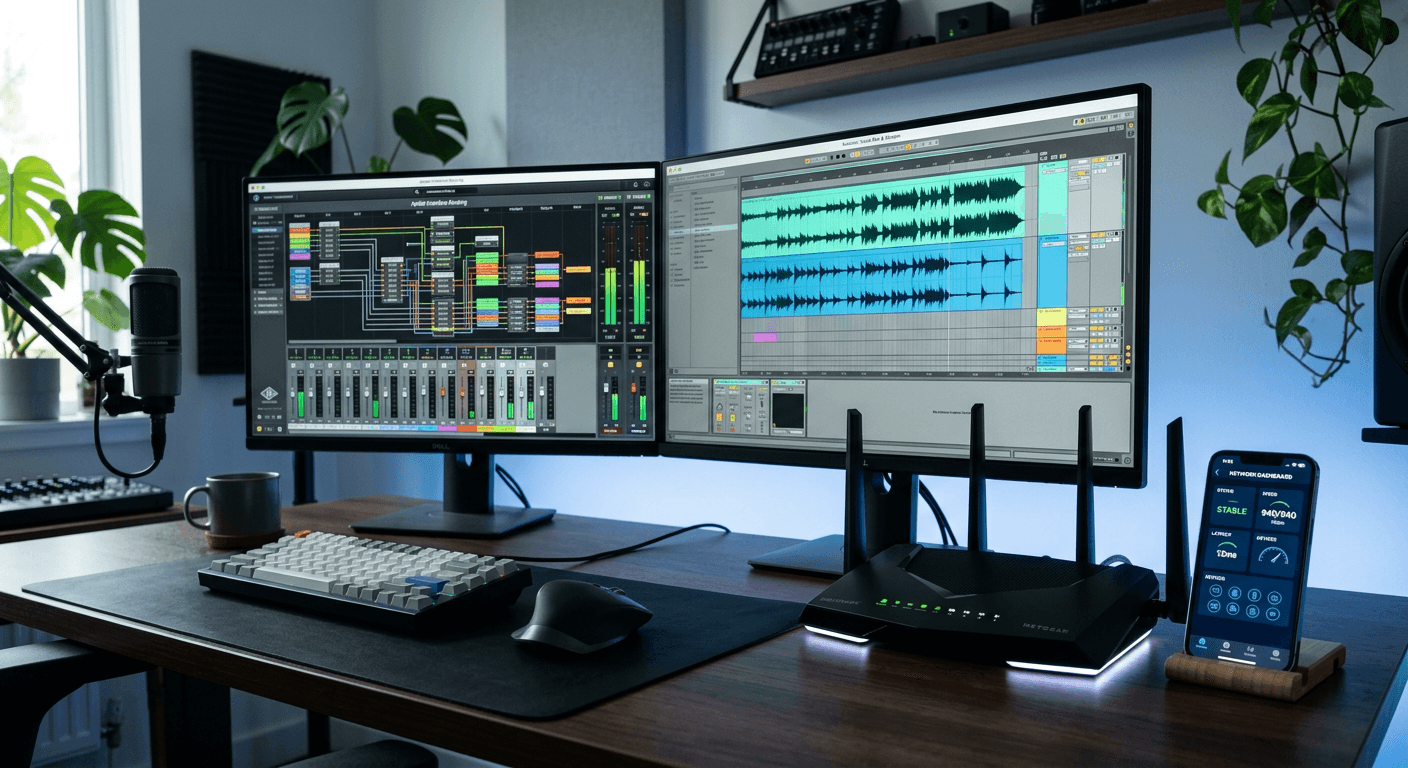
A freelance broadcast engineer sits down on Tuesday morning, trying to patch a multi-channel podcast feed to a remote co-host, only to realize the connection keeps dropping. They assume the internet is down, but the actual failure is inside the software routing layer. "The network is broken" is not a diagnosis - multiple different protocols fail across a modern remote setup, and they all require distinct fixes. Diagnosing connectivity in a virtual workspace requires understanding exactly which layer is failing, starting from local audio management using tools like asio link pro all the way out to how clients access your external portfolio.
Quick Summary
This article evaluates the six technical categories of connectivity links that power decentralized workspaces, ranging from local audio routing protocols to cellular gateways. You will understand how each layer operates, where the physical and software limits lie, and what to measure to prevent network collapse during heavy collaboration tasks.
- Virtual audio protocols require matched buffer sizes to prevent digital clipping.
- Consumer hardware bridges inherently halve your local Wi-Fi bandwidth.
- Cellular gateways rely on carrier-grade NAT, which breaks direct peer-to-peer VoIP connections.
- Centralized web hubs simplify client access but require robust edge hosting to prevent DNS outages.
Table of Contents
- Defining the Lens: From ASIO Link Pro to Global Nodes
- Comparison Table of Connectivity Categories
- 1. Virtual Audio Bridges
- 2. Automotive Sync Interfaces
- 3. Consumer Network Extenders
- 4. Security Automation Gateways
- 5. Remote Cellular Endpoints
- 6. Centralized Digital Hubs
- Buying Guide: Evaluating Your Link Infrastructure
- Mapping Your Network Bottlenecks
- Recommended Reads
Defining the Lens: From ASIO Link Pro to Global Nodes
Connectivity in a virtual workspace is not just about raw download speeds; it is about how specifically data is routed, restricted, and formatted across different layers. We evaluate these six link categories based on protocol stability under sustained load, integration capability within closed ecosystems, and physical hardware limits. A standard feature count is useless here because a high-bandwidth consumer router solves an entirely different structural problem than a low-latency virtual audio cable.
Comparison Table of Connectivity Categories
| Category | Mechanism | Pros | Cons | Target Audience |
|---|---|---|---|---|
| Virtual Audio Bridges | Driver-level PCM audio interception | Bypasses OS latency for real-time routing | High CPU dependency crashes audio streams | Podcast producers, live broadcasters |
| Automotive Sync Interfaces | Bluetooth SPP / CAN bus integration | Safe, hands-free transit communication | Rapid firmware depreciation drops calls | Traveling professionals, field agents |
| Consumer Network Extenders | Layer 2 MAC address half-duplex repeating | Immediate physical dead-zone coverage | Inherent 50% bandwidth halving | Home office workers needing basic access |
| Security Automation Gateways | Encrypted RS-485 serial communication | Absolute isolation from web vulnerabilities | Zero standard API or software integration | Remote facility managers, site security |
| Remote Cellular Endpoints | MVNO bandwidth leasing with CGNAT | Portable, requires no hardwired ISP | Aggressive traffic shaping kills live video | Temporary site workers, remote freelancers |
| Centralized Digital Hubs | Anycast DNS and edge-hosted HTML routing | Unifies external client traffic securely | Single point of DNS failure | Creators, service providers, online stores |
1. Virtual Audio Bridges
A local software transport layer designed for broadcasters who need to route distinct audio channels between digital audio workstations and streaming software without noticeable delay.
Standard operating system APIs restrict applications to shared audio access, introducing significant latency. ASIO drivers bypass the operating system entirely, granting software direct access to the hardware converter. Virtual routing tools intercept this raw stream. By creating virtual I/O ports, a software tool like asio link pro captures the uncompressed PCM audio data and sends it across a local area network or internally between host applications with near-zero latency.
Check today: Open your digital workstation's hardware settings and check the buffer size; a mismatch with the routing software causes immediate digital clipping.
Driver exclusivity blocks concurrent application access
The fundamental flaw of direct hardware access is exclusivity. When you route a virtual cable to split an audio signal, you introduce a software middleman that requires constant CPU polling. If your processor spikes due to a background video render, the audio buffer empties entirely, instantly crashing the stream. Broadcasters should skip local software routing if their computer lacks thermal headroom, opting instead for dedicated physical hardware mixers.
- Pros: Completely bypasses native OS audio latency; enables complex multi-channel broadcasting.
- Cons: High CPU dependency; requires strict sample rate and buffer matching.
2. Automotive Sync Interfaces
Vehicle-bound connectivity systems that bridge mobile collaboration tools with dashboard infotainment hardware, intended for field professionals taking meetings in transit.
Automotive infotainment hubs do not run standard mobile operating systems. They utilize a localized CAN bus architecture to manage physical vehicle data, bridging to mobile devices via specific Bluetooth profiles. When establishing a connection to an r-link unit or equivalent dashboard system, the hardware negotiates the Hands-Free Profile for voice and the Serial Port Profile for data. This strips the mobile application UI down to safety-compliant elements and routes the VoIP packet data exclusively through the vehicle's embedded microphone array.
Check today: Verify which Bluetooth protocol your vehicle negotiated during your last call; defaulting to a legacy SBC codec heavily compresses your voice to the remote team.
Proprietary automotive firmware outpaces hardware lifecycles
Automotive manufacturers abandon dashboard software updates years before the vehicle stops running. An aging r link dashboard interface cannot process modern TLS security certificates or utilize newer, less congested Bluetooth bands. You cannot swap the internal routing hardware without voiding the vehicle warranty. When the proprietary firmware ages out, the connection degrades into intermittent drops and severe audio desync during live meetings. Professionals reliant on seamless transit communication should bypass the vehicle's native OS entirely and use a dedicated mobile headset.
- Pros: Integrated driver safety controls; leverages built-in cabin acoustics for noise cancellation.
- Cons: Firmware depreciates rapidly; closed hardware ecosystem prevents custom upgrades.
3. Consumer Network Extenders
Physical radio hardware used by remote workers to push local area network coverage into structural dead zones where running physical Ethernet cable is impossible.
Wireless bridging operates entirely at Layer 2 of the network model. Devices like a b-link repeater do not intelligently route traffic; they simply listen and repeat. The unit captures 802.11 beacon frames from the primary router, amplifies the signal, and broadcasts it again. Because standard consumer radios cannot transmit and receive on the same channel simultaneously, they rely on collision avoidance protocols, waiting for dead air before firing a packet.
Check today: Run a continuous terminal ping to your local gateway IP while connected to the extender; response variance over 15 milliseconds indicates the bridge is struggling with collision avoidance.
Half-duplex transmission inherently halves your available bandwidth
A single-radio repeater cuts your actual throughput by exactly 50 percent the moment it powers on. Every packet must be received, held, and then re-transmitted. This introduces physical jitter that ruins real-time VoIP and screen-sharing traffic. If your remote setup requires sustained upload speeds for live client video feeds, an unmanaged consumer bridge will buckle under the packet load. You must pull a physical cable or invest in a dedicated tri-band mesh system with a dedicated wireless backhaul.
- Pros: Instant deployment in physical dead zones; requires zero complex network configuration.
- Cons: Inherent bandwidth halving; introduces crippling jitter for live video collaboration.
4. Security Automation Gateways
Isolated hardware communication hubs that securely connect a remote physical workspace to alarm panels, access control units, and local environmental monitoring.
Security architectures actively reject standard IP-based discovery protocols. Instead, these gateways communicate with physical sensors over encrypted RS-485 serial buses using dry contacts. To modify this logic remotely without exposing the building to the internet, technicians use dedicated diagnostic software. An f link configuration panel connects locally via USB or over an isolated, dynamic IP tunnel to write logic gates directly into the mainboard's non-volatile memory, completely bypassing third-party cloud servers.
Check today: Inspect the panel's remote access logs to see if it relies on a static IP address; standard ISP IP rotations will instantly sever a static configuration.
Security-first architectures aggressively reject standard API integrations
You cannot easily merge physical security networks into your daily digital workflow. These systems are air-gapped by design and refuse to talk to standard collaboration tools. You will not get a Slack notification when the office door opens, nor can you script an automation to turn on the studio lights when the panel disarms. If you require deep integration between your physical environment and your digital dashboard, traditional security gateways are the wrong choice; you need a consumer IoT ecosystem, accepting the massive drop in actual data security.
- Pros: Absolute data isolation; immune to standard web-based vulnerabilities.
- Cons: Zero integration with modern collaboration software; requires specialized diagnostic training.
5. Remote Cellular Endpoints
Subsidized mobile broadband endpoints engineered to provide baseline internet connectivity for temporary work sites or underserved locations.
These units lack their own physical infrastructure. Instead, they rely on network agreements to lease excess bandwidth from tier-1 cellular towers. To manage thousands of users on a single tower, a subsidized q-link connection heavily utilizes Carrier-Grade NAT (CGNAT), sharing a single public IP address across multiple devices. The carrier's core network runs aggressive traffic shaping scripts that deprioritize continuous UDP streams - like live video calls - to keep basic HTTP web traffic flowing for the broader region.
Check today: Perform a sustained download test of a large file rather than a quick speed test; a continuous 10-minute load reveals the hidden thermal throttling limit of the internal modem.
Aggressive traffic shaping breaks continuous video streams
Subsidized cellular endpoints are built for burst web traffic, not sustained transmission. When you initiate a continuous screen-sharing session, the cell tower detects the prolonged UDP stream and actively throttles the packet rate to prevent you from monopolizing the radio band. Furthermore, the internal modems in these cheap gateways lack physical heat sinks, causing them to overheat and drop the connection entirely during long meetings. Anyone conducting daily client presentations must secure an unshaped business line.
- Pros: Highly portable deployment; eliminates the need for hardwired ISP installation.
- Cons: Severe carrier-side UDP throttling; hardware overheats under sustained collaboration loads.
6. Centralized Digital Hubs
Web-based aggregation pages that consolidate a professional's disparate URLs, booking calendars, and portfolios into a single, mobile-optimized external touchpoint.
Instead of relying on local network hardware, these platforms operate at the DNS layer. They utilize Anycast routing and global edge networks to point a custom domain to the nearest server. When a client requests the page, the server renders a lightweight HTML payload while executing server-side tracking pixels. This architecture parses analytics data without triggering client-side ad blockers, redirecting the user to the underlying asset in under a hundred milliseconds.
Check today: Run your current landing page through a synthetic load tester to measure the Time to First Byte; a response above 200 milliseconds indicates the host lacks proper edge distribution in your region.
Offloading your primary navigation creates a single point of failure
Centralizing your professional presence means you surrender control of the underlying infrastructure. You do not own the load balancers or the DNS records managing the traffic. If the platform experiences a database outage or their certificates fail to renew, your entire outward-facing business goes dark simultaneously. High-volume e-commerce stores with massive, complex product catalogs should build dedicated, self-hosted web architectures rather than forcing their inventory through a simplified aggregation layer.
- Pros: Unifies client access instantly; requires zero backend maintenance or server provisioning.
- Cons: Platform outages take down all your links simultaneously; unsuited for complex e-commerce inventory.
Buying Guide: Evaluating Your Link Infrastructure
When auditing your virtual workspace, you must distinguish between physical network failures and software routing constraints. Throwing more bandwidth at a connection problem rarely fixes a local driver mismatch or a thermal-throttling cellular modem.
First, isolate the transport layer. If your local audio drops but your video remains stable on a stream, the issue lies in local hardware exclusivity, not your internet service provider. Second, evaluate physical constraints versus protocol constraints. A half-duplex radio bridge will always drop packets under heavy load regardless of how fast your primary fiber connection is; fixing it requires pulling physical cable, not upgrading your data plan. Finally, audit your external touchpoints. Managing disparate hosting environments creates unnecessary DNS vulnerabilities and fragments client tracking.
Mapping Your Network Bottlenecks
Selecting the right connectivity layer depends entirely on where your data stalls. A freelancer running a home studio faces entirely different constraints than a technician configuring a remote alarm panel.
- If your bottleneck is raw audio routing latency on a local machine, deploy the ASIO standard and configure rigid buffer sizes to bypass the OS kernel.
- If your bottleneck is physical distance and impossible cable runs in a home office, skip half-duplex consumer repeaters and install a mesh network with a wired backhaul.
- If your bottleneck is scattered client scheduling and fragmented portfolios, migrate to a centralized digital identity hub to let edge servers handle the traffic load.
- If your bottleneck is live video consistency in a remote location, drop the subsidized gateway and secure a dedicated enterprise cellular line that prioritizes UDP streams.
Stop treating network failure as a generic mystery. Isolate the layer, identify the hardware limit, and rebuild the connection.