Top Professional Link-Kabel and Data Connectivity Solutions for 2026
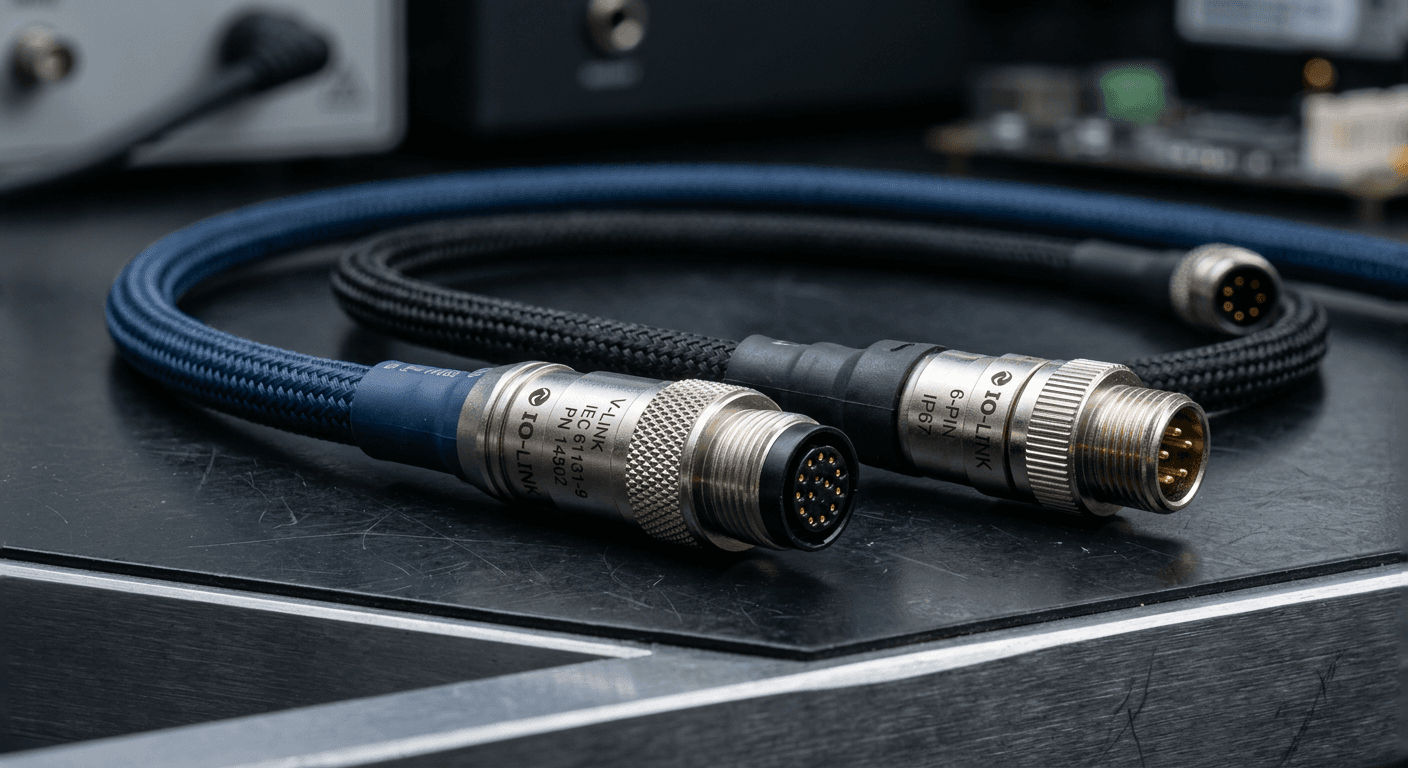
Selecting the right link-kabel infrastructure is essential for maintaining signal integrity and operational uptime in demanding industrial and professional networking environments. Whether you are optimizing an io link sensor network or deploying high-speed v link communication channels, the quality of your connectivity hardware determines the longevity and reliability of your entire data architecture. As we look toward 2026, the transition toward more robust, interference-resistant cabling has become a standard necessity rather than a luxury.
Quick Summary {#quick-summary}
Professional data connectivity relies on specialized physical layers to ensure low-latency signal transmission and physical durability. Link-kabel standards are critical for environments requiring high-precision data acquisition and harsh-environment protection.
- Prioritize shielding and conductor density for signal-critical applications.
- Match the connector standard (io link, s-link, or c-link) to your device's interface specifications.
- Verify environmental ratings, such as IP67 or IP69K, for industrial exposure.
- Ensure compatibility between v-link hardware and existing infrastructure to avoid signal attenuation.
Table of Contents {#table-of-contents}
- Comparison Table
- Industrial Grade io link Connectivity
- High-Performance v-link Infrastructure
- Reliable s-link Modular Systems
- Advanced c-link Data Interfaces
- Buying Guide: How to Choose Professional Cabling
- FAQ
- Recommended Reads

Comparison Table {#comparison-table}
| Category | Primary Use Case | Durability | Complexity | Best For |
|---|---|---|---|---|
| io link | Sensor/Actuator | High | Moderate | Factory Automation |
| v-link | High-speed Data | Very High | High | Digital Signage |
| s-link | Modular Sensing | Medium | Low | Scalable Systems |
| c-link | Interface Control | High | Moderate | Custom Integration |
Industrial Grade io link Connectivity {#industrial-grade-io-link-connectivity}
The io link standard has fundamentally shifted how sensors communicate within automated environments. By providing a bi-directional interface, this technology allows for real-time diagnostics and parameter configuration, which is essential for predictive maintenance in 2026 manufacturing facilities. Using a high-quality link-kabel for these connections reduces the risk of packet loss, which can otherwise trigger expensive downtime.
Professionals should look for IO-Link masters that support advanced IO-Link V1.1+ specifications to maximize the full diagnostic potential of their sensors. When deploying these systems, consider the cable jacket material, as PUR (Polyurethane) is generally superior to PVC in environments exposed to oils and extreme mechanical stress. Learn more about optimizing your physical layer at https://kodelink.eu.com to ensure your hardware meets the latest standards.
- Pros: Real-time diagnostic feedback, easy parameterization, reduced wiring complexity.
- Cons: Limited transmission distance compared to fieldbus, requires specialized masters.
High-Performance v-link Infrastructure {#high-performance-v-link-infrastructure}
v-link and its evolved v-link variants are designed for scenarios where bandwidth stability is the priority. These solutions are often utilized in professional A/V setups and complex data backbones where signal jitter is unacceptable. The high-performance shielding present in professional-grade v-link cables is specifically engineered to mitigate Electromagnetic Interference (EMI) in noisy electrical environments.
When working with v-link hardware, it is critical to verify the bandwidth specifications, as entry-level cables may struggle to maintain signal integrity over long runs. Proper cable management, including the use of shielded RJ45 or M12 connectors, is vital to achieving the intended performance throughput. High-performance connectivity remains a cornerstone of modern digital infrastructure, requiring meticulous attention to technical specs.
- Pros: Exceptional bandwidth, low signal latency, robust shielding.
- Cons: Higher cost per meter, requires precise installation techniques.
Reliable s-link Modular Systems {#reliable-s-link-modular-systems}
s-link technology offers a highly modular approach to device connectivity, making it a favorite for scalable sensing arrays. Unlike more rigid systems, s-link allows for rapid expansion without the need to overhaul the entire network architecture. This flexibility is crucial for laboratories and research facilities that frequently adjust their sensor layouts.
When choosing an s-link solution, prioritize systems that offer quick-connect coupling mechanisms. This significantly reduces installation time and allows for hot-swapping modules during operation. While s-link may not always match the raw data speed of specialized industrial links, its ease of use and reliability make it the go-to for mid-tier data acquisition needs.
- Pros: High modularity, plug-and-play setup, cost-effective scaling.
- Cons: Lower maximum data throughput, less suited for extreme high-speed applications.
Advanced c-link Data Interfaces {#advanced-c-link-data-interfaces}
c-link hardware serves as a bridge for legacy and modern interface control systems. It is primarily used in instrumentation where precise timing and localized control are necessary. The strength of the c-link ecosystem lies in its predictability; it is a stable, mature technology that rarely requires firmware updates once configured.
For engineers building custom integration solutions, c-link provides a reliable hardware foundation. By utilizing high-conductivity copper strands, these links ensure that voltage drops remain minimal across complex wiring trees. Integrating these components effectively often requires an understanding of your system's total impedance. You can find technical documentation for integrating various hardware standards at https://kodelink.eu.com to streamline your deployment.
- Pros: Predictable performance, long-term stability, minimal maintenance.
- Cons: Declining support for very high-speed tasks, legacy-focused interface.
Buying Guide: How to Choose Professional Cabling {#buying-guide-how-to-choose-professional-cabling}
When selecting connectivity hardware, the first step is to evaluate your environmental constraints. A cable that performs flawlessly in an office environment will fail quickly in a manufacturing plant due to chemical exposure or mechanical abrasion. Always check the IP (Ingress Protection) rating; an IP67 rating is the bare minimum for any solution exposed to dust or moisture.
Second, consider the termination type. Field-wireable connectors offer more flexibility for custom lengths, while pre-molded factory cables provide superior sealing and reliability. Finally, verify the bandwidth requirements of your devices. Over-specifying your cables is rarely a disadvantage, but under-specifying will lead to intermittent signal drops and ghosting errors in your data logs.
FAQ {#faq}
- What is the primary difference between io link and standard sensor cables? io link cables support bi-directional data transmission and device-specific diagnostics, whereas standard cables typically handle only analog or binary on/off signals.
- How does shielding affect v-link performance? High-quality shielding minimizes crosstalk and external EMI, which is vital for maintaining high-speed data integrity over distances exceeding three meters.
- Can I mix different connectivity types in one system? While physically possible with adapters, mixing standards often introduces impedance mismatches and signal latency, which should be avoided in precision applications.